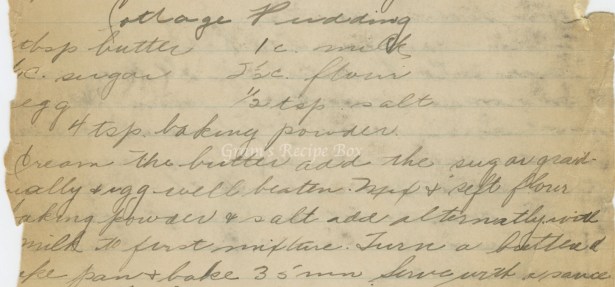
Cottage Pudding

Cottage Pudding was a tremendously popular dessert in the second half of the 19th century. Apparently it was originally devised or published during the 1860s, with popularity growing until it appeared in the 1896 Fannie Farmer cookbook. As we have previously learned, “pudding” doesn’t necessarily mean the dish is a soft and squishy milk based product that most Americans think of when you say pudding. Pudding the word traces itself back to England and meant “dessert” in a general sense. So, a pudding could have been any sort of dessert brought to a table after a meal.

From what I can find, cottage pudding is a cake-like dessert, but one that needs a sauce to make it more enjoyable. The cake itself can be quite dense, but the addition of a sauce (most commonly chocolate or lemon), makes the cake become a soft and mushy treat. I will have to try this recipe. There isn’t a sauce with it, so you can add any sauce you like.

The name “cottage pudding” should also tell us that this is a recipe for every day people. Cottage meals were considered to be easier, made with ingredients common to hand, and could be found in nearly every cottage or farmhouse. The amount of butter varies widely from recipe to recipe and may be based on what the person had available to them. While this page of the book crumbled and I can’t see how much butter was called for, commonly it’s between 2 T to 1/4 pound (8 T).

Cottage Pudding

2 tbsp butter

1 c milk

1/2 c sugar

2 1/2 c flour

1 egg

1/2 tsp salt

4 tsp baking powder

Cream the butter, add the sugar gradually & egg well beaten. Mix and sift flour, baking powder and salt, add alternately with milk to first mixture. Turn into a buttered cake pan & bak 35 min. Serve with a sauce.

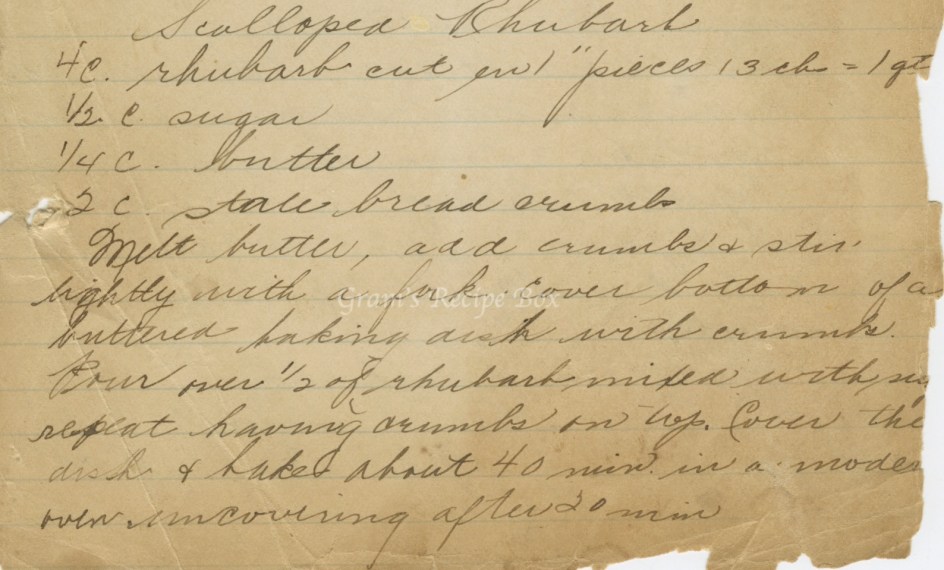
Scalloped Rhubarb

Not to be confused with celery, rhubarb is a pink, stalk plant in the vegetable family. The use of rhubarb originated in medicine, but some time in the 18th century, people started using it in the kitchen as well. It has a strong, tart taste which leads it to most often being prepared with sugar. Some parts of the plant are poisonous, so while it is easy to grow, care should be taken when harvesting and consuming. This particular dish sounds like a side rather than a dessert.

Scalloped Rhubarb

4 c rhubarb cut in 1 pieces (???) = 1 qt

1/2 c sugar

1/4 c butter

2 c stale bread crumbs

Melt butter, add crumbs & stir lightly with a fork. Cover bottom of a buttered baking dish with crumbs. Pour over 1/2 of rhubarb mixed with sugar. Repeat, having crumbs on top. (you will make layers of the crumbs and rhubarb pieces, the top layer will be crumbs) Cover the dish & bake about 40 min in a moderate oven, uncovering after 20 min.

Prune Pudding

Modern day prunes have a bad rap, but in history a prune was just a type of plum. There are different types of plums, and one thing that differentiates them is how easily the stone or pit comes out. Prunes are freestone, meaning their stone comes out easily, whereas most plums available in the grocer’s wagon these days are clingstone, meaning the stone clings to the fruit. This particular recipe calls for prunes that will be cleaned and then cooked – therefore, they are a fresh fruit, and not the dried plum “prune” most people probably pictured in their minds at first.

Prune Pudding

1/2 lb prunes equal to about 29

2 c cold water

1 c sugar

1 inch piece stick cinnamon

1 Tbsp lemon juice

1/3 c cornstarch

Pick over and wash prunes. Soak one hour in cold water & cook until soft in same water or cook in fireless cooker (??). Remove stone from prunes, add boiling water, sugar & cinnamon stick. Simmer 15 minutes. Mix cornstarch with enough cold water to pour easily & add to the prune mixture. Cook until it thickens. Remove cinnamon, add lemon juice, mould & chill. Serve with plain or whipped cream.

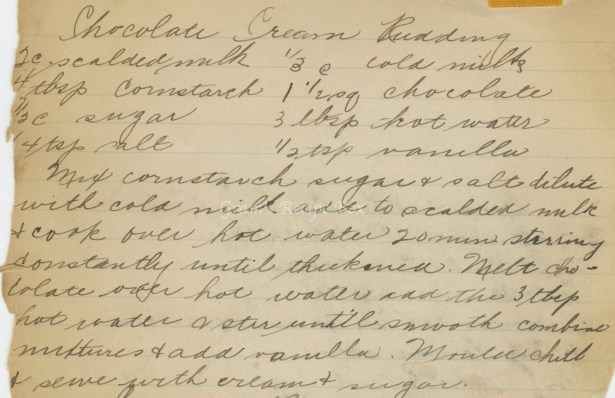
Chocolate Cream Pudding

A pudding isn’t necessarily what Americans picture when someone says “pudding.” A traditional “figgy pudding” of Christmas carol fame is more like a fruit cake, and I have a recipe for an upside down pudding that really is a self-saucing cake. However, this pudding sounds like it might actually be a molded pudding, with consistence to cornstarch pudding. You could use one of the fancy gelatin moulds that were popular in the mid century, made by Ekko I believe.

Chocolate Cream Pudding

2 c scalded milk

1/3 c cold milk

4 Tbsp cornstarch

1 1/2 sq chocolate (unsweetened chocolate)

1/2 c sugar

3 Tbsp hot water

1/4 tsp salt

1/2 tsp vanilla

Mix cornstarch, sugar & salt. Dilute with cold milk, add to scalded milk & cook over hot water 20 minutes stirring constantly until thickened. Melt chocolate over hot water, add the 3 Tbsp hot water & stir until smooth. Combine mixtures & add vanilla. Mould, chill, and serve with cream & sugar.

Pickled Onions

Thinking about food and how we have nearly everything available at our fingertips these days, it makes the concept of canning and preserving food seem obsolete. In the days when there were not international trade agreements or interstate trucking available to most people, the canning and preserving of food was an important method of sustaining the population over a long winter. Corn harvested in the warm months could be canned for enjoyment at Christmas and Easter. In the very early days of food importation, red and green peppers were preserved in the same method as mangoes, leading them to be called mango peppers. In this same vein, pickling was an important preservation method. Pickling of fish and various vegetables allowed them to be shared and enjoyed for months after they were freshly caught or picked. Today, pickled and canned goods are still available, but the home canning or pickling of produce has dropped off significantly. There are still many people who enjoy it, but it is not a necessity as it used to be. Maybe that’s both a good and a bad thing. On the one hand, we aren’t as desperate as we used to be, but on the other hand, we are forgetting long held skills as a society. A conundrum to consider, indeed.

Pickled Onions

Place onions in boiling hot water, then peel. Make vinegar water to taste. Cut red & green peppers in small squares.