Braciole

Braciole

Meat rolled around cheese, sounds good to me!

BracioleBack

Here’s the method

I didn’t realize I had missed some posts, so I apologize! I try to write a bunch of posts and schedule them, but sometimes I forget to go back and write more posts for you all.

Today’s recipe for Braciole is of an Italian origin. Braciole is the plural of “braciola” and I gather is a Sicilian version of “involtini,” meaning “little bundles.” Braciole is generally made of a thin strip of meat – beef and pork being most common – wrapped around a cheese mixture, tied into a bundle or roll, then cooked. Some sources say that braciole are not the main dish, but a side or second course, served after pasta. Many people in America however serve them as part of the main course. The word braciole is pronounced bra-shole, from what I have read.

Braciole

1 beef flank steak (1 1/2 lob)

4 TB olive oil, divided

1/2 c soft bread crumbs

1/2 c fresh parsley

1/2 c grated parmesan cheese

2 minced galic cloves

1 tsp oregano

1/2 tsp salt

1/2 tsp pepper

1 medium onion, chopped

2 15 oz cans tomato sauce

1/2 c water

1 tsp Italian seasoning

1/2 tsp sugar

Hot cooked spaghetti

Flatten steak (use rolling pin, put clear plastic over meat). Rub with 1 TB oil. Combine bread crumbs, parsley, cheese, garlic, oregano, 1/4 salt, 1/4 pepper. Spoon over beef to 1″ of the meat (edge). Press down. Roll like jelly rolls starting with long side. Tie with kitchen string.

In dutch oven, brown on sides. Add onion & cook until tender. Add all other ingredients. 70-80 minutes or until tender.

Italian Cheesecake, made

Quite some time ago, I posted a recipe called Italian Cheesecake. At the time, I thought it sounded really good and that maybe I would try it someday. This past weekend was the time, and I tried it! It was very easy, not a difficult process at all, and the result is really lovely.

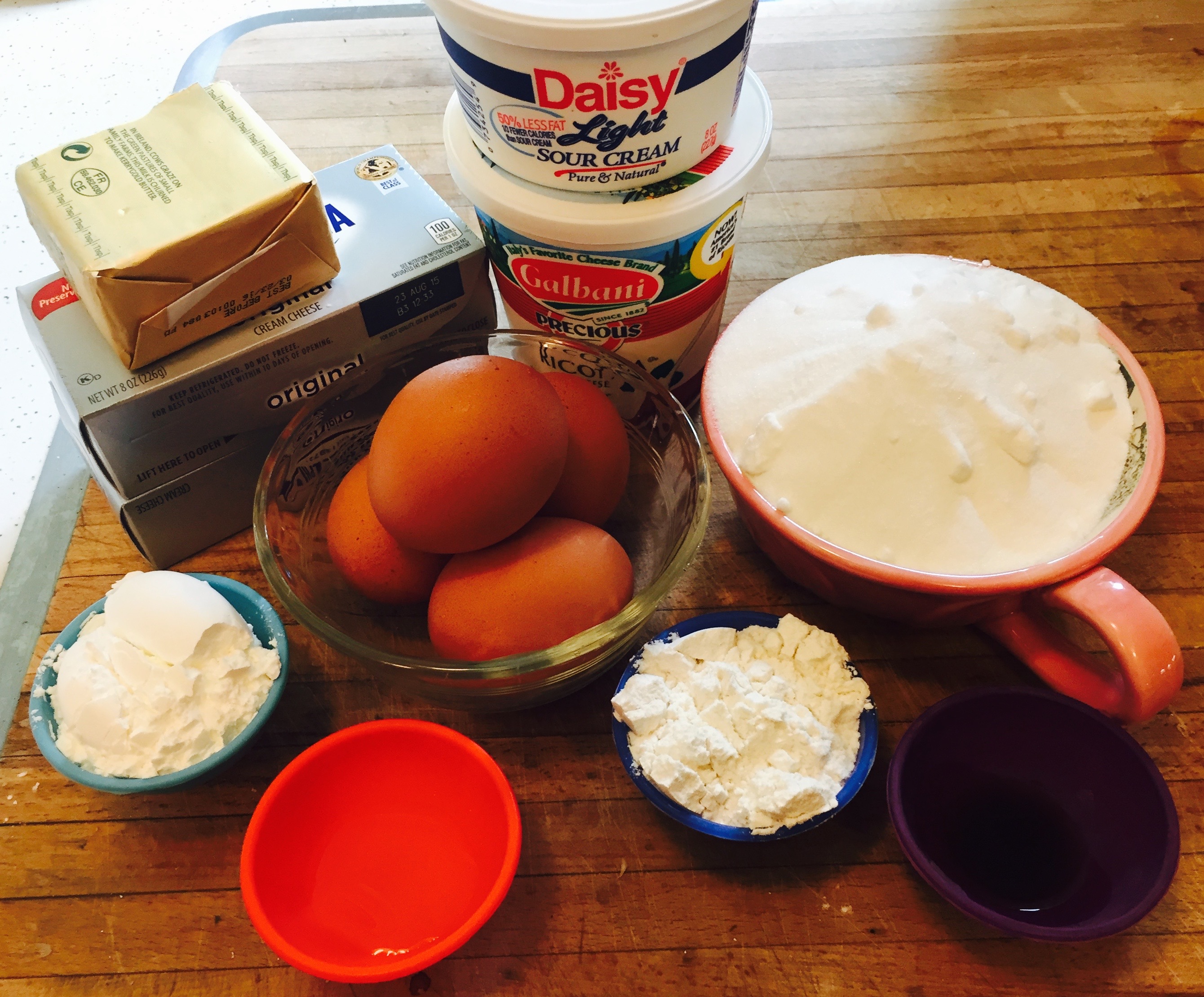
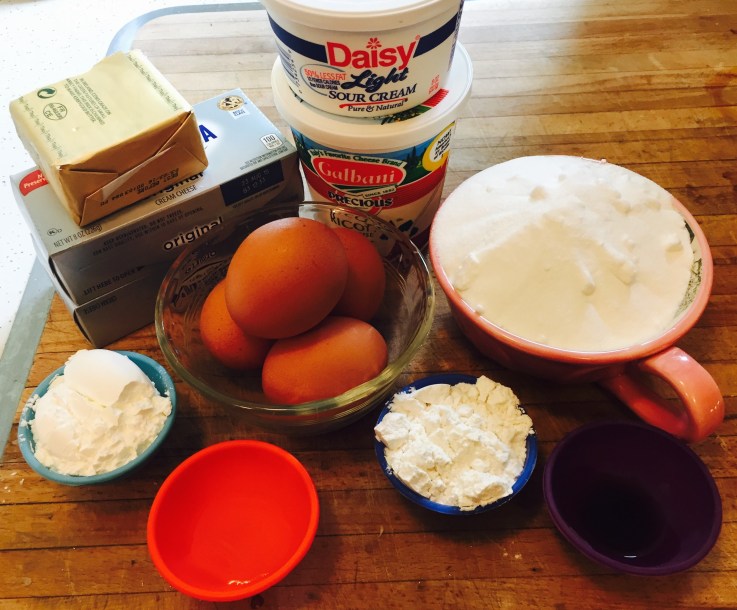
The ingredients include ricotta cheese, Philadelphia cream cheese and sour cream, so this is not a diet recipe.
IMG_1784

Yes, I bought light sour cream but it was an accident

Of note is the fact that Precious ricotta cheese no longer comes in a 16 oz container. They have reduced the volume to 15 oz, but I don’t think this will impact the recipe in any way. I like to set out all my ingredients before I start mixing because then they are all handy and I’m not rushing to find something. I use a KitchenAid Pro stand mixer, which is wonderful when you have to add, then add some more, then add yet some more. No fussing with picking the mixer up, putting it down, back and forth. It’s a stylistic choice, but one I didn’t realize I would ever make until I received my mixer as a gift.

Once everything was combined nicely, I poured it into a spring lock pan. I happened to cut a piece of parchment paper to fit the bottom of the pan because I had heard of someone else doing that. It isn’t required and I honestly don’t really know if it made any difference. Also, the recipe indicates the pan should not be greased and I had greased mine and poured in the mixture before I caught that tidbit. It might be important.
IMG_1786

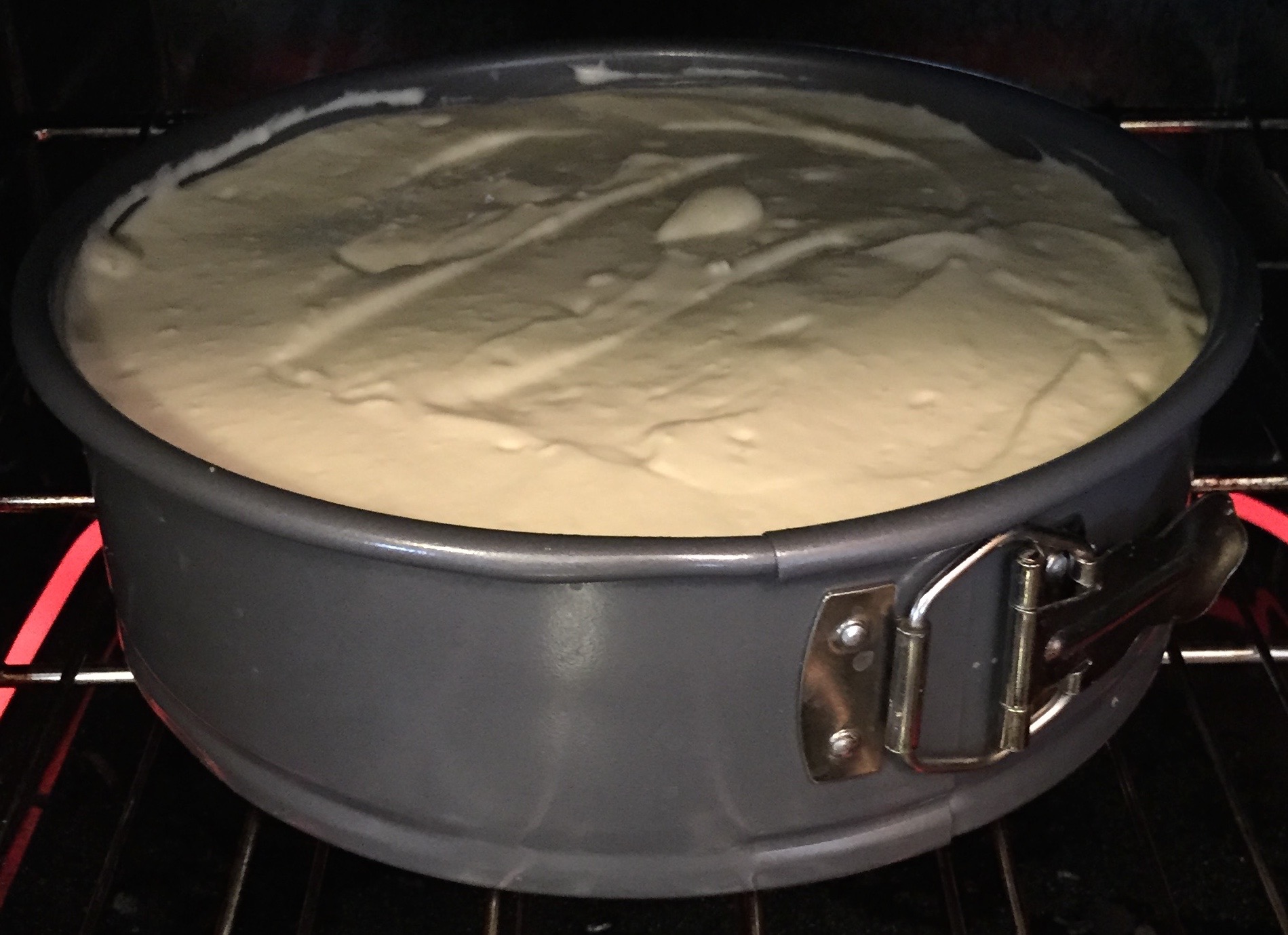
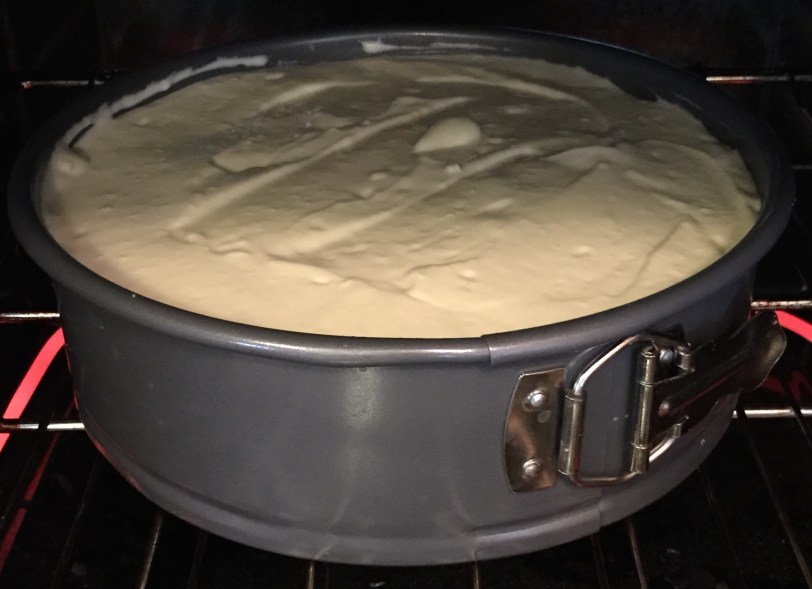
Smooth and creamy, into the oven you go!

I always forget to take pictures during the process, sorry! Here the cheesecake has just entered the oven and you can see that my pan is filled to the brim. During baking, the cake rose well above the top of the pan, easily 3/4″. I baked this for the proscribed amount of time and temp, which was 1 hour at 325º. Then, turn off the oven but don’t touch that cake! Allow it to set in the oven for an additional 2 hours. Unfortunately, it still cracked on the top. A good friend of mine has suggested using a water bath to keep the cheesecake from cracking.
IMG_1792

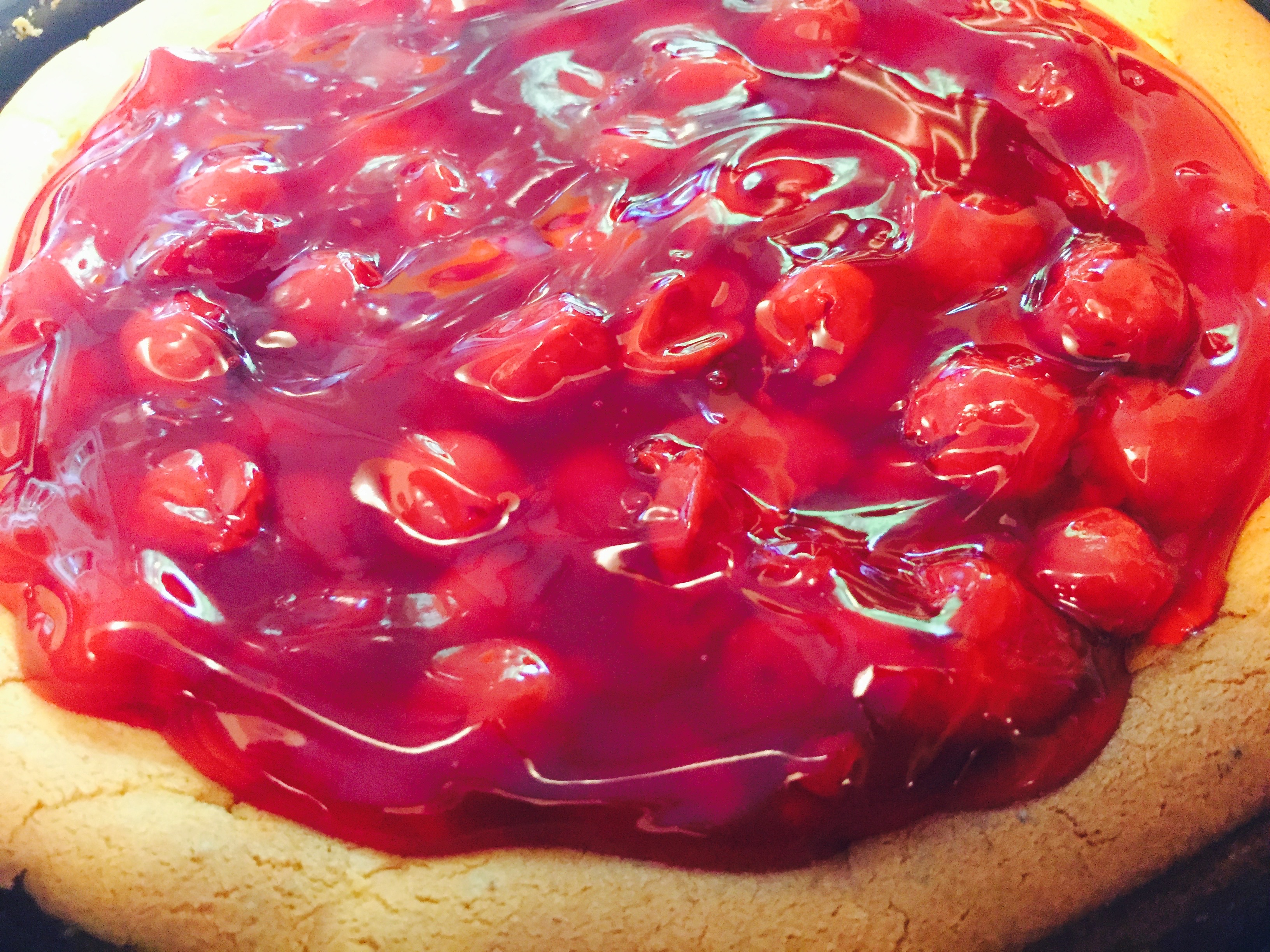
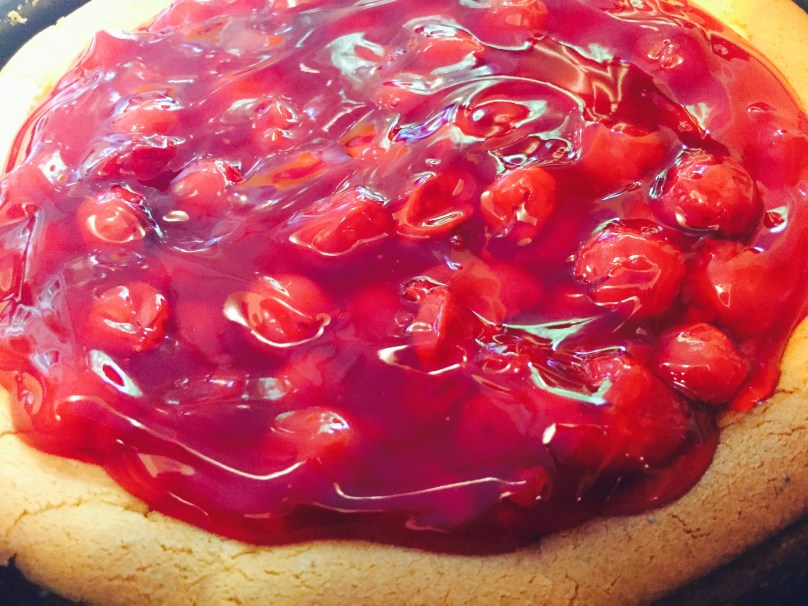
Cherry topped

The center fell a smidge, but that made a nice reservoir for the cherry topping. Back when I originally posted this recipe, I suggested I’d probably use cherry topping and not strawberry. Having forgotten all about that off hand remark, I was tickled to see that after I had purchased all the ingredients. You can see here that the top edges are a bit browned. They also fell away from the sides of the pan, which is where the greasing might have been a problem. If they were allowed to stick to the sides of the pan, they might not have pulled away so much. But, did it affect the taste? Inquiring minds want to know, I’m sure!

IMG_1798

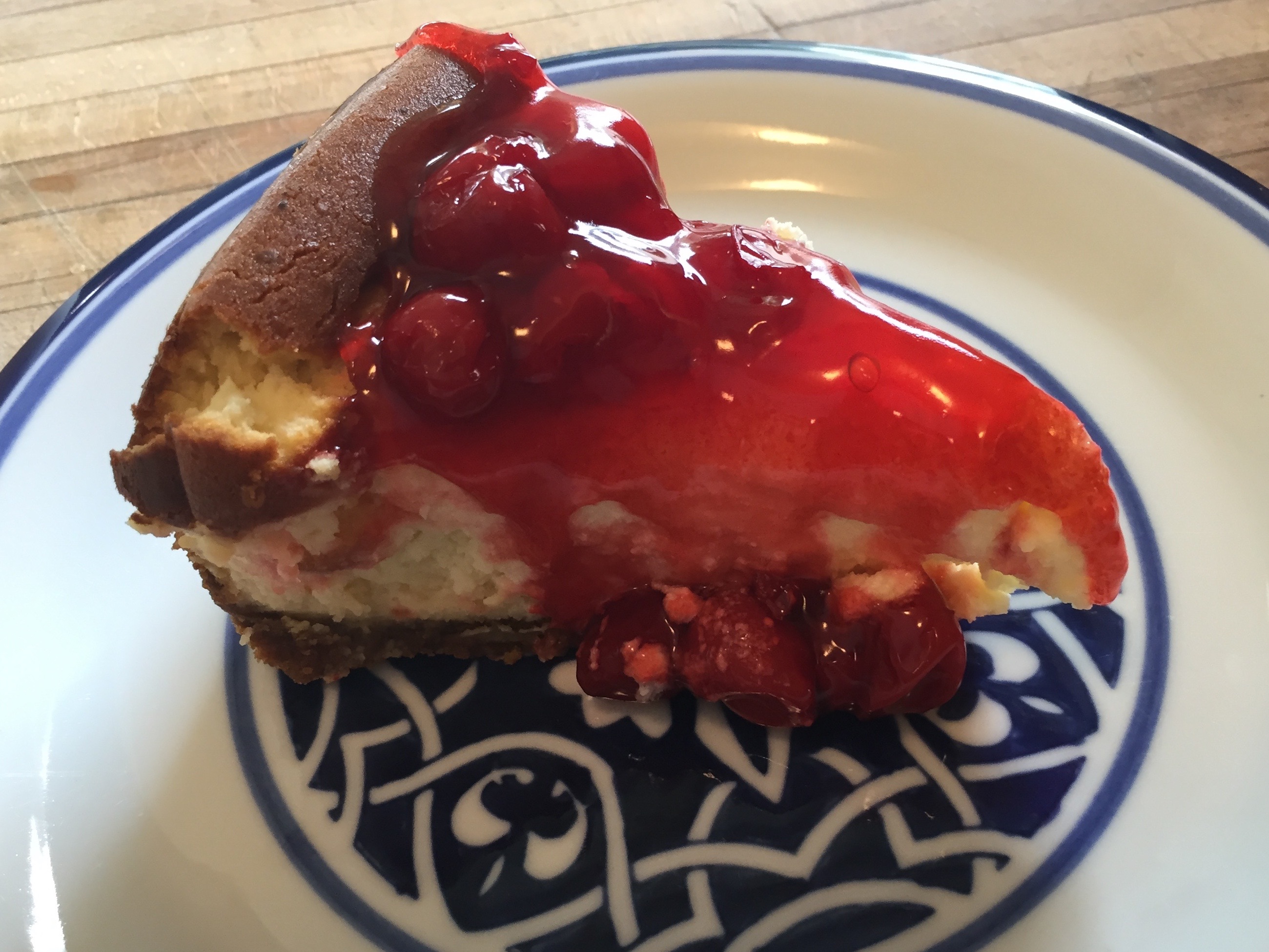
Delicious!

This cheesecake turned out delicious, creamy and moist, not to firm, but definitely filling! I made a graham cracker crust that was really delicious too. The original recipe doesn’t call for that, but I think it would be a nice addition. If you don’t like cherries, you can use pretty much any topping, or just leave it plain. That’s good too.  My husband the cheesecake aficionado declared this cheesecake recipe a keeper! I hope you will be inspired to give it a try as well; it is quite worth it!

P.S. You will please forgive these horrible pictures! My previous home had a perfect location for photographing my cooking endeavors, but this new home has a giant window right by my workspace, and while that is great when working, it is bad for photographing anything. I will try to figure out a better method.

Baked Hamburg & Rice

Baked HamburgRice

Hamburg or hamburger?

BakedHamburgRiceBack

How to make this dish

Here’s a funny little bit of history for you. Supposedly, in Hamburg Germany, ground round was being used to create a Hamburg Steak, or Hamburger Steak, a form of meat dish possibly originating as early as the 1860s. In America we often think of it as a Salisbury Steak, topped with mushroom gravy or other sauces. The original name was a nod to its origins in the town of Hamburg – a resident of the town being called a Hamburger. There is no ham in hamburger.

The word hamburg in culinary terms refers to the uncooked meat, while the word hamburger refers to the cooked patty of meat. A hamburger sandwich supposedly originated somewhere near the turn of the century (1900 to be exact, not 2000), with various Americans and others claiming to have been the first to put a hamburger patty onto bread. While many claim to have invented it, the first written documentation of an actual hamburger as our modern thinking recognizes it, was in 1896 in the Chicago Daily Tribune.

This particular usage of hamburg vs hamburger is not unfamiliar to me. It must have been a colloquialism used in my family or others, because I instantly knew this referred to the uncooked meat, even though in the grocery you will find ground round sold as hamburger. Also, many grocers sell any form of ground beef as hamburger these days, while it originated as ground round. Fillers and other things have been added to the mix over the years to make 1 pound of meat go a lot farther than 1 pound of ground meat.  To circumvent this, you can purchase 100% ground round, or you can purchase a cut of round and have it ground by your butcher.

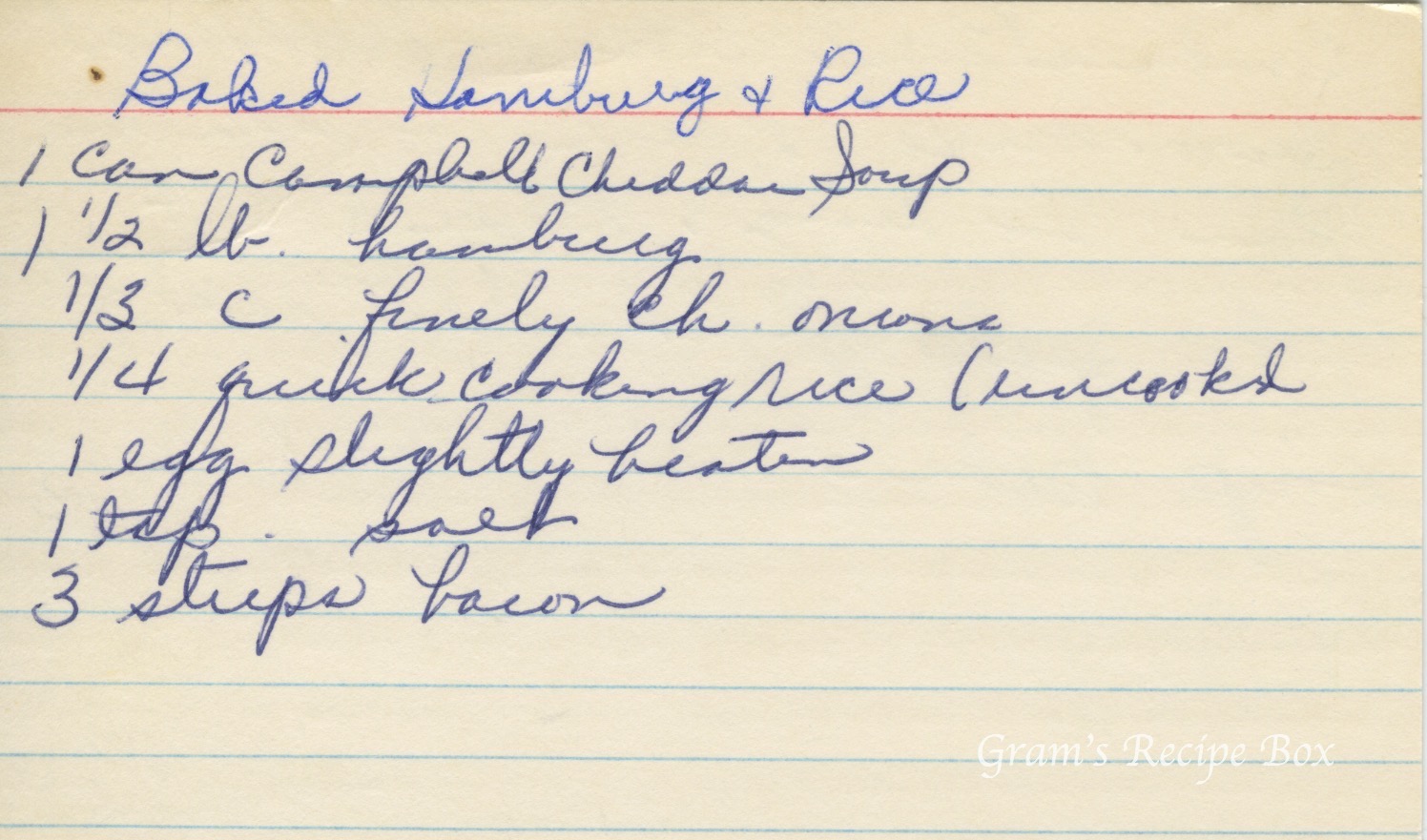
Baked Hamburg & Rice

1 can Campbell’s cheddar soup

1 1/2 lb hamburg

1/3 c finely chopped onions

1/4 c quick cooking rice (uncooked)

1 egg slightly beaten

1 tsp salt

3 strips bacon

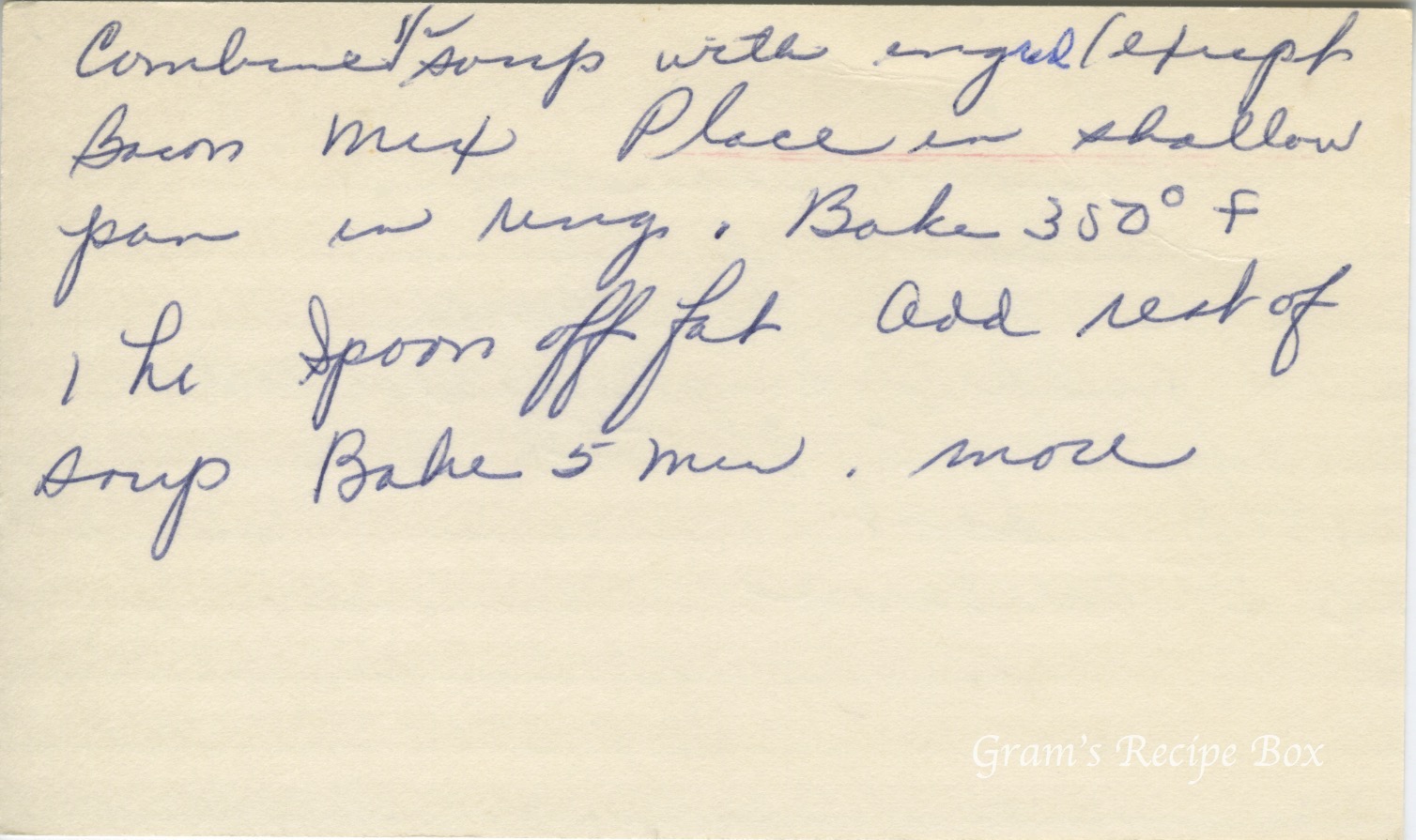
Combine 1/2 soup with ingredients except bacon. Mix. Place in shallow pan in ring. Bake 350º F 1 hour. Spoon off fat. Add rest of soup. Bake 5 minutes more. I have no idea what to do with the bacon…just eat it!


Sloppy Lasagna #2

SloppyLasagna2

A second sloppy lasagna recipe

I recently shared with you a recipe called Sloppy Lasagna – which sounds really yummy and easy. This particular card appears to be virtually identical in ingredients and method, so the cook could have forgotten that she wrote it twice, or wrote out one to share and then forgot to give it to someone. I’m going to write the recipe with the correct spellings of the ingredients.

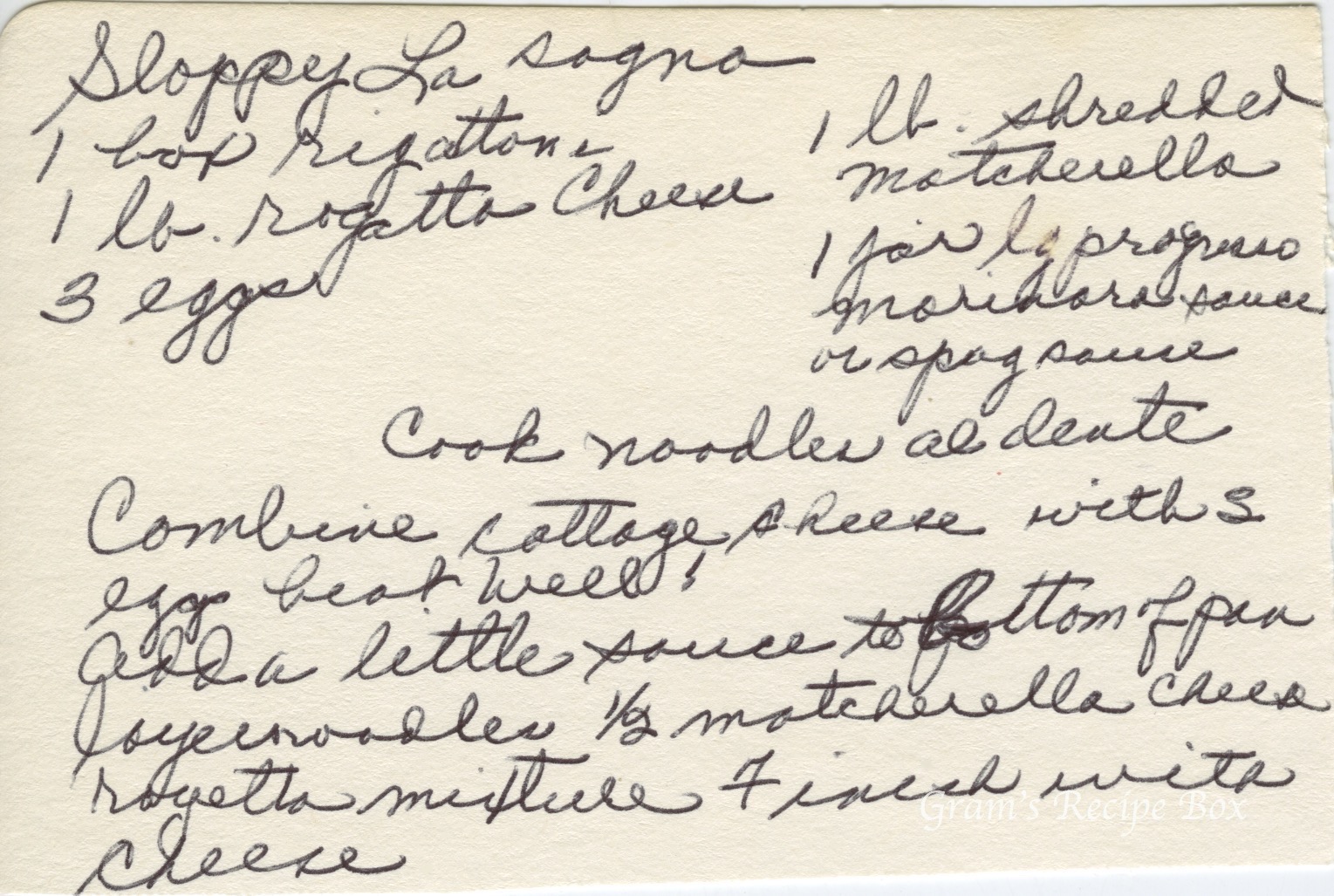
Sloppy Lasagna

1 box rigatoni

1 lb ricotta cheese

3 eggs

1 lb shredded mozzarella cheese

1 jar large Progresso marinara sauce or spaghetti sauce

Cook noodles al dente. Combine cottage [ricotta] cheese with 3 eggs, beat well. Add a little sauce to bottom of pan. Layer noodles, 1/2 mozzarella cheese, ricotta mixture. Finish with [mozzarella] cheese.


Stuffed Cabbage

StuffedCabbage

Ingredients list, stuffed cabbage

StuffedCabbageBack

Method, continued

Even though I occasionally like sauerkraut, and I use cabbage when I make my stir fry dishes, I am not a fan of cooked cabbage. They are a staple of Eastern European cooking and also appear in some Asian countries. Typically, the include a meat, spices, vegetables, and grains such as rice or barley. Depending on which country’s cuisine, there may be additional ingredients or fewer, and they may be steamed, baked, boiled, or otherwise prepared. They are not unlike dolmas or sarmas of Mediterranean and MidEast cuisine, although those use grape leaves rather than cabbage leaves.

Stuffed Cabbage

2 envelopes instant tomato soup mix

1 envelope onion soup mix

1/2 [lb] ground beef [not sure if this should be cooked or not]

1/4 c uncooked instant rice

1 T water

Cabbage leaves, parboiled

1/4 tsp caraway seeds

1/2 c boiling water

Combine soup, ground beef, rice & 1 T water. Roll up in cabbage leaves. Place in skillet, seam side down. Blend in soup with boiling water, soup, caraway seeds. Pour over rolls. Simmer covered, basting occasionally for 20 min or until done.