Devils Food Cake

Devils food is usually a moist and delicious chocolate cake. This recipe follows the “new” method espoused in the 1950s for sifting dry, then adding wet ingredients. I have several other devils food cake recipes posted on the site. You can find them by searching, or just browse the “cake” category, although that would probably distract me with all the other lovely options. :-)

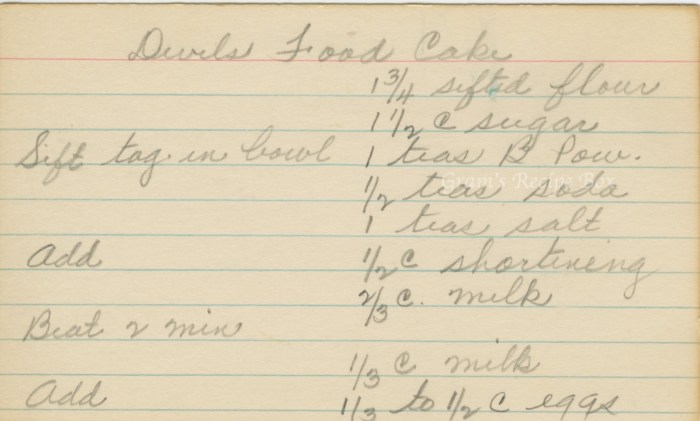
Devils Food Cake

Sift together in bowl

1 3/4 sifted flour

1 1/2 c sugar

1 teas B Pow

1/2 teas soda

1 teas salt

Add

1/2 c shortening

2/3 c milk

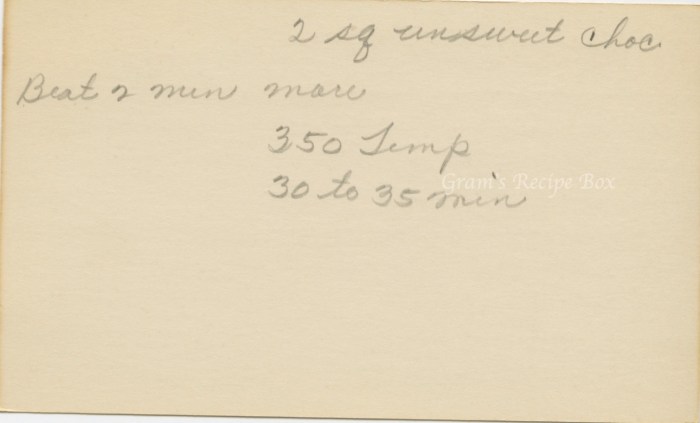
Beat 2 minutes

Add

1/3 c milk

1/3 to 1/2 c eggs

2 squares unsweetened chocolate (I assume melted)

Beat 2 minutes more

350 temp

30 to 35 min

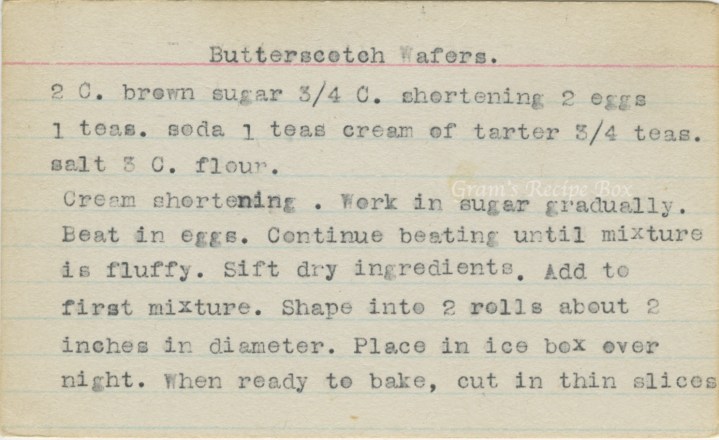
Butterscotch Wafers

Today’s recipe for Butterscotch Wafers reminds me how much of cooking is chemistry. Why, you ask? Well, this recipe calls for cream of tartar. Many recipes that use egg whites also call for cream of tartar, but many of us don’t know why. It’s just something about making the egg whites rise nicely, right? So I did a little searching, and as it turns out, cream of tartar is a really interesting compound. The chemical name is potassium bitartrate and is a byproduct of wine making and the processing of grape juice. It has been called “wine diamonds” in the past as the crystalized potassium bitartrate would cling to the underside of a cork in certain conditions. Cream of tartar is derived from these crystals. In baking, cream of tartar is an acid that can help to stabilize egg whites or whipped cream when beating, or even be used as a household cleaner when mixed with something acidic such as lemon juice. The cream of tartar changes the ph of egg whites just enough to stabilize the proteins when egg whites are whipped into a foam, thereby allowing the oxygen that has been beaten into the whites to remain sturdy. The resulting baked items (angel food cake, merengues, etc) will be more glossy, white, and airy. Be sure to click through the links after the recipe for more information.

I find it really funny after that chemistry lesson to read that the recipe does NOT have you mix the cream of tartar into the egg mixture, but instead add it to the dry ingredients. I wonder how it would be different if you made that switch. I suspect however, that it is being used to prevent the sugars from crystalizing during baking, which is another use of cream of tartar.

Butterscotch Wafers

2 c brown sugar

3/4 c shortening

2 eggs

1 teas soda

1 teas cream of tartar

3/4 teas salt

3 c flour

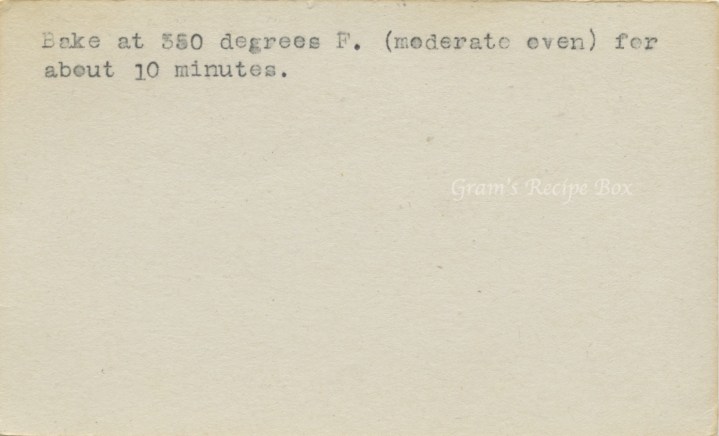
Cream shortening. Work in sugar gradually. Beat in eggs. Continue beating until fluffy. Sift dry ingredients. Add to first mixture. Shape into 2 rolls about 2 inches in diameter. Place in ice box over night. When ready to bake, cut in thin slices. Bake at 350 degrees F (moderate oven) for about 10 minutes.


Additional Information

What is cream of tartar via slate.com

Potassium bitartrate via wikipedia

What is it and how to use it via allrecipes.com
Haystacks

This recipe for Haystacks had me turning to the internet for more information. The mystery: what exactly is corn soya? As it turns out, corn soya was one version of “fameal” a wheat/soy or corn/soy blend mixed together for a nutritious (?) base product that can be made into other things such as bread, and distributed as part of hunger aid programs around the world. It came into use in 1949 in food-aide programs under the US Agriculture Act of 1949. The mixture can be made into porridge, used to replace flour in bread recipes, dumplings and cookies.

The Kellogg’s company thought corn soya would make a great breakfast cereal, so in the 1950s, they used this base product to make a stick-like cereal. Picture the fried won ton sticks you get at a Chinese restaurant and it might have been similar to that. Online commenters who ate Corn Soya Shreds during the 1950s say it was sweet and delicious. I have seen other recipes for Haystacks using chow mien noodles, but keep in mind they would not be sweet like the original corn soya cereal.

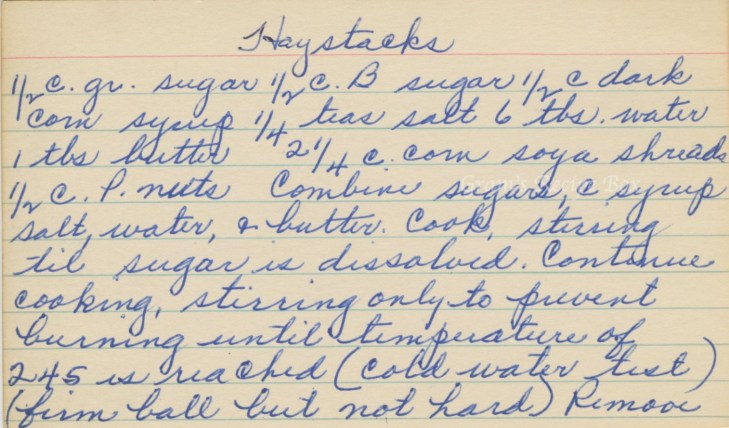
Haystacks

1/2 c sugar

1/2 c brown sugar

1/2 c dark corn syrup (Karo)

1/4 teas salt

6 tbs water

1 tbs butter

2 1/4 c corn soya shreds

1/2 c peanuts

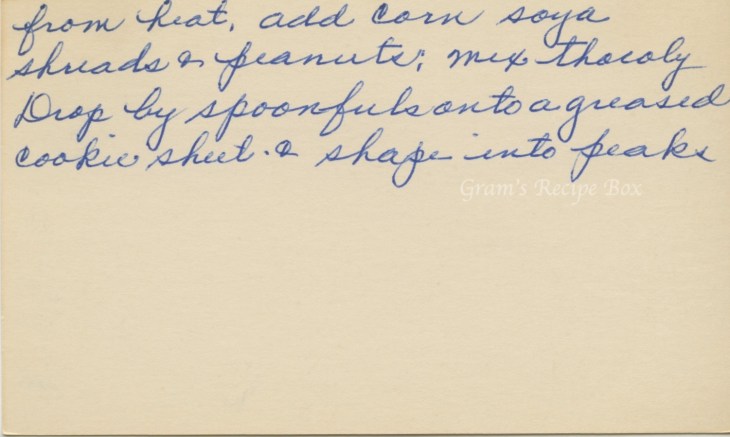
Combine sugars, corn syrup, salt, water & butter. Cook, stirring until sugars are dissolved. Continue cooking, stirring only to prevent burning, until temperature of 245 is reached (cold water test) (firm ball but not hard). Remove from heat, add corn soya shreds and peanuts. Mix thoroughly. Drop by spoonfuls onto a greased cookie sheet & shape into peaks.


Additional Information

Corn Soya Cereal via MrBreakfast.com

Fameal via wikipedia

Pineapple Gelatine Squares

I won’t deny it: I dislike gelatin desserts and salads. In a recent post I said that during the 60s, the best food was easy food, and gelatin dishes feel like a cop-out to me. There’s very little effort to making a jello salad. Maybe that was the intent, but for me it’s just a hard pass. Don’t let my opinion sway you if this sounds tasty, though! These sound like they are meant to be a fancy “salad” served during a plated luncheon. Let’s play bridge after eating!

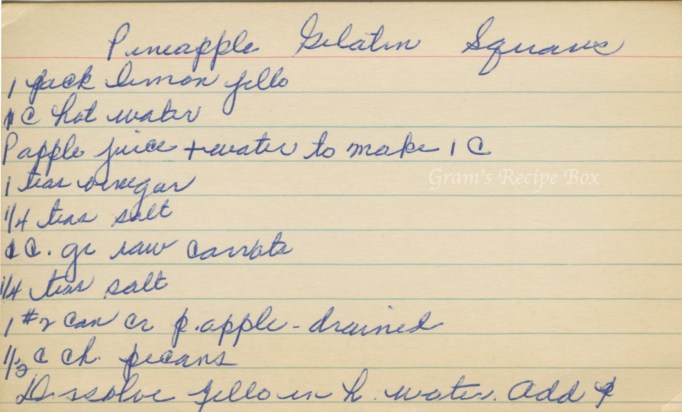
Pineapple Gelatin Squares

1 pack lemon jello

1 c hot water

Pineapple juice & water to make 1 cup

1 teas vinegar

1/4 teas salt

1 c grated raw carrots

1/4 teas salt

1 #2 can crushed pineapple – drained (retain the juice for the pineapple juice/water mix above)

1/2 c chopped pecans

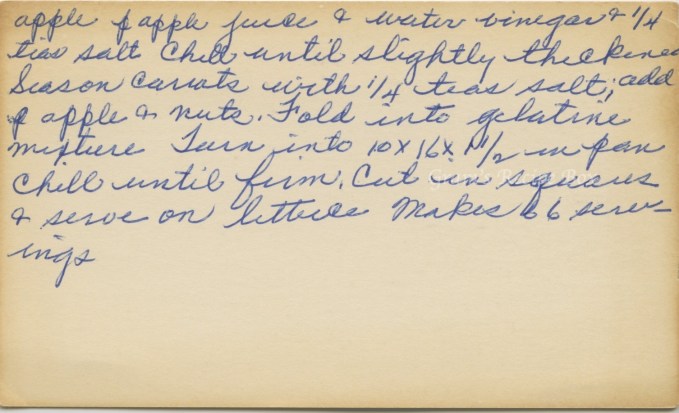
Dissolve jello in hot water. Add pineapple juice & water, vinegar 7 1/4 teas salt. Chill until slightly thickened. Season carrots with 1/4 teas salt; add to pineapple & nuts. Fold into gelatin mixture. Turn into 10x16x1 1/2 pan. Chill until firm. Cut in squares & serve on lettuce. Makes 6 servings.

Baked Apple Dumplings

There was a restaurant I went to a long time ago that had a baked apple very similar to this. It was divine, served warm with a scoop of vanilla ice cream. I highly recommend giving this recipe a try – I’m going to very soon! Honeycrisp apples are in season right now and would be deliciously sweet and tart in this dumpling.

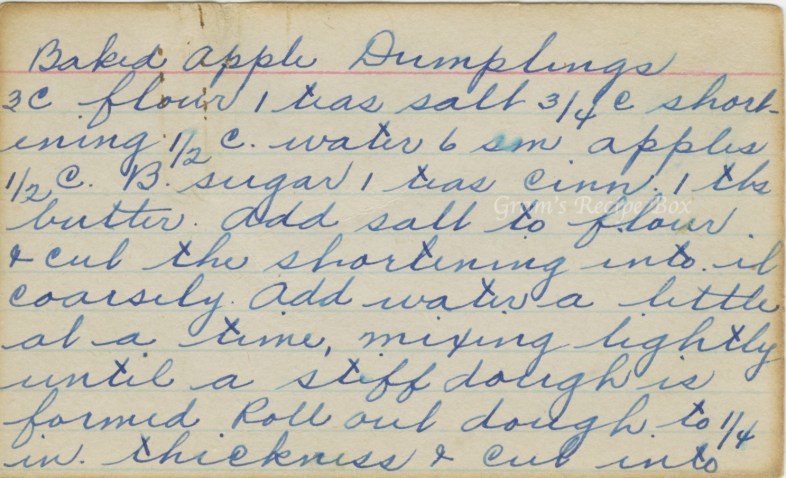
Baked Apple Dumplings

3 c flour

1 teas salt

3/4 c shortening

1/2 c water

6 small apples

1/2 c Brown sugar

1 teas cinnamon

1 tbsp butter

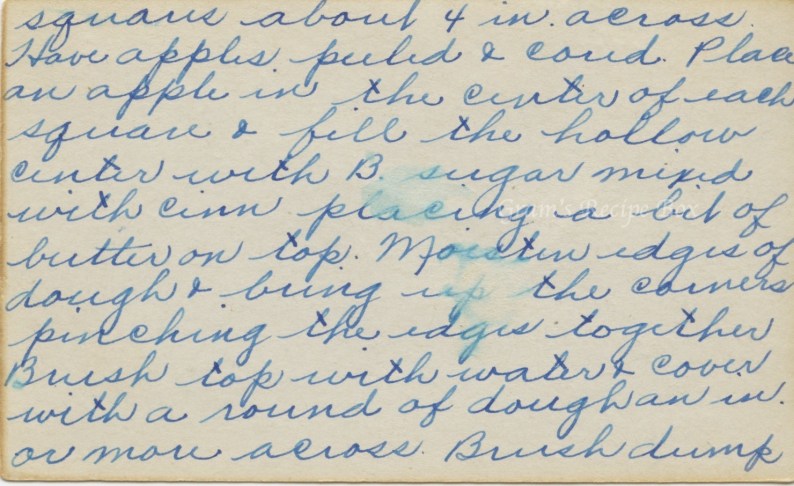
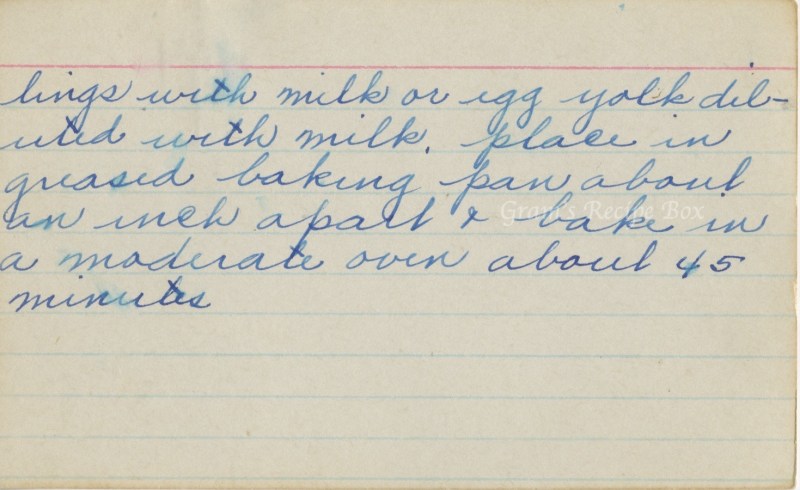
Add salt to flour & cut the shortening into it coarsely. Add water a little at a time, mixing lightly until a stiff dough is formed. Roll out dough to 1/4 inch thickness & cut into squares about 4 inches across. Have apples peeled & cored. Place an apple in the center of each square & fill the hollow center with Brown sugar mixed with cinnamon, placing a bit of butter on top. Moisten edges of dough & bring up the corners, pinching the edges together. Brush top with water & cover with a round of dough an inch or more across. Brush dumplings with milk or egg yolk diluted with milk. Place in greased baking pan about an inch apart & bake in a moderate over about 45 minutes.