So Easy to Make: Bread & Butter Pickles

After reading the recipe for bread & butter pickles recently, and then doing some research on making pickles, I decided I would try to make this recipe from the Farmer’s Record. I was inspired by seeing smallish cucumbers at the store that would make the perfect B&B slices. In my research on pickles I learned that the smaller the cucumber, the better the pickle. It has to do with a chemical in the cukes that provides that “cucumbery” smell and taste. The smaller the cuke, the less strong that chemical. Also, they will have fewer seeds. Ideally you want to use pickling cucumbers which are naturally low in that chemical, but since I don’t have a farmer’s market handy, I went with these.
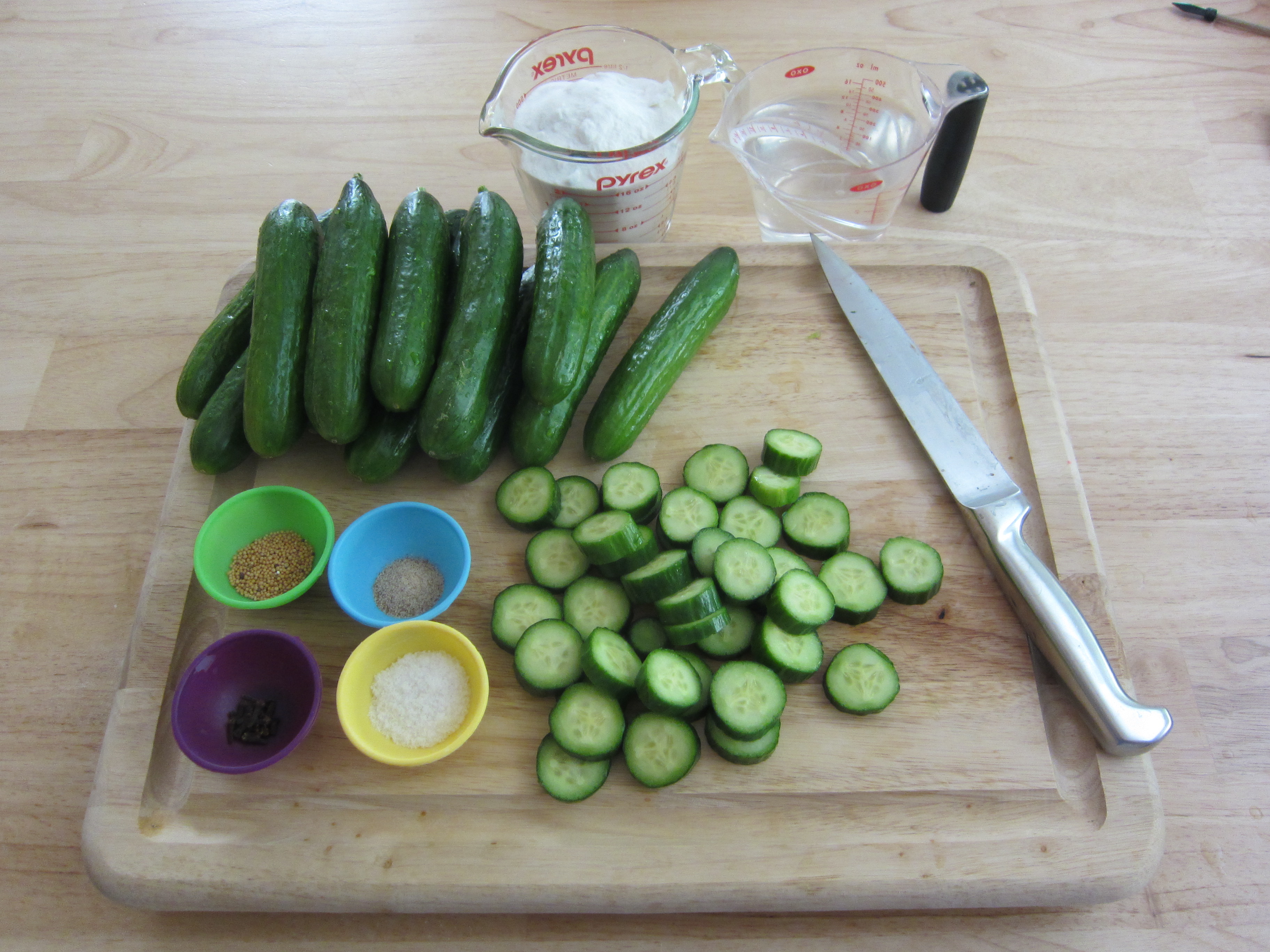
I have often admitted that I can’t leave anything alone, so I added a small amount of whole cloves to the ingredient list, even though it is not called for. It just sounded good to me. Secondly, I used sea salt, and since I only had celery salt on hand I reduced the amount of salt. You do not want to use iodized table salt for pickling as the taste of the iodine will taint the flavor. Pick up some sea salt or flake salt the next time you are at the grocery or a natural foods store. It’s worth it!
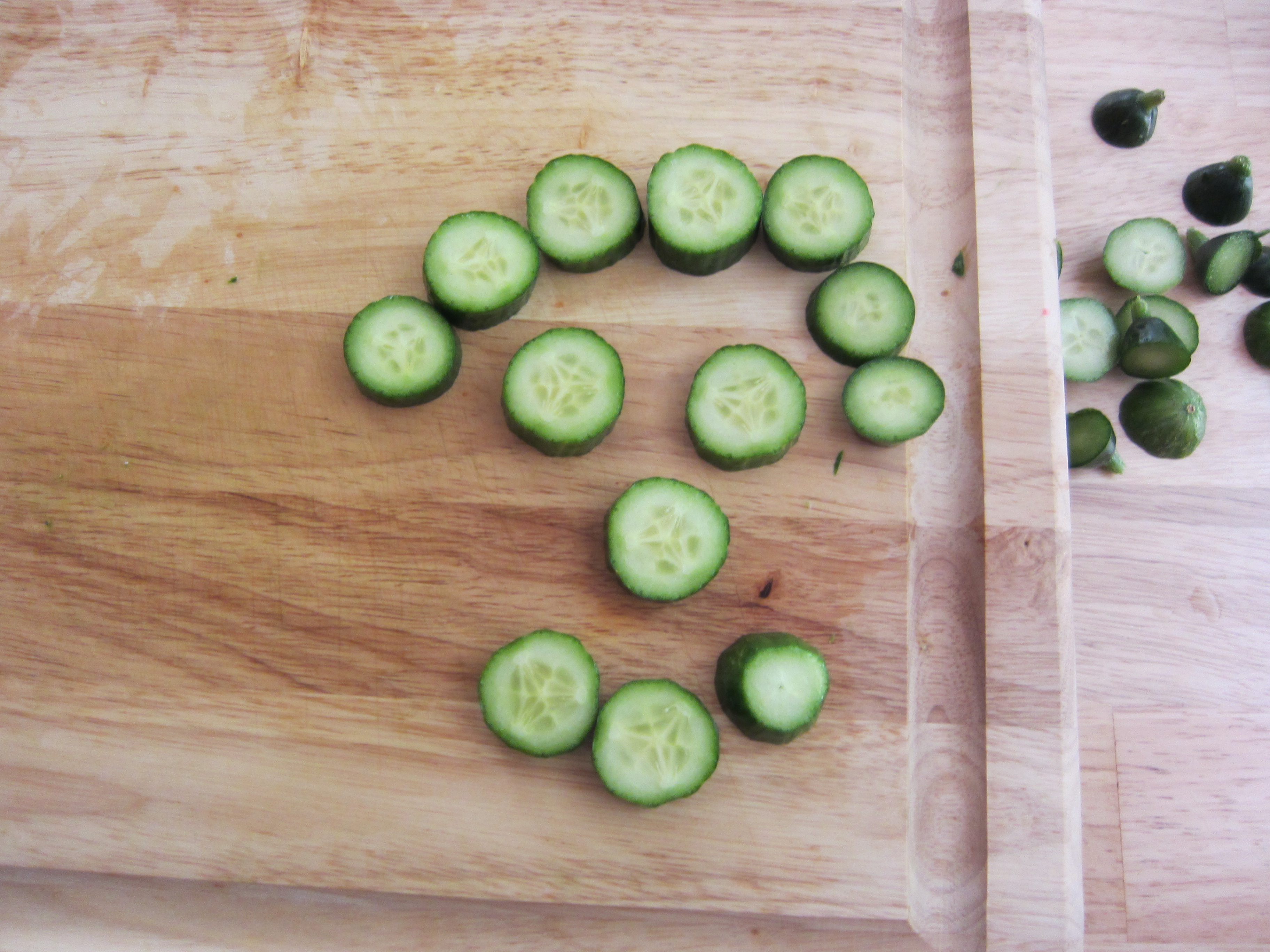
My helper was eager to work with the sliced cucumbers. She also stirred the vinegar and sugar in the large pot until the sugar was dissolved, and added the spices to the mix. Oh, she also added the cucumber slices. Basically Melody made these pickles. :-)
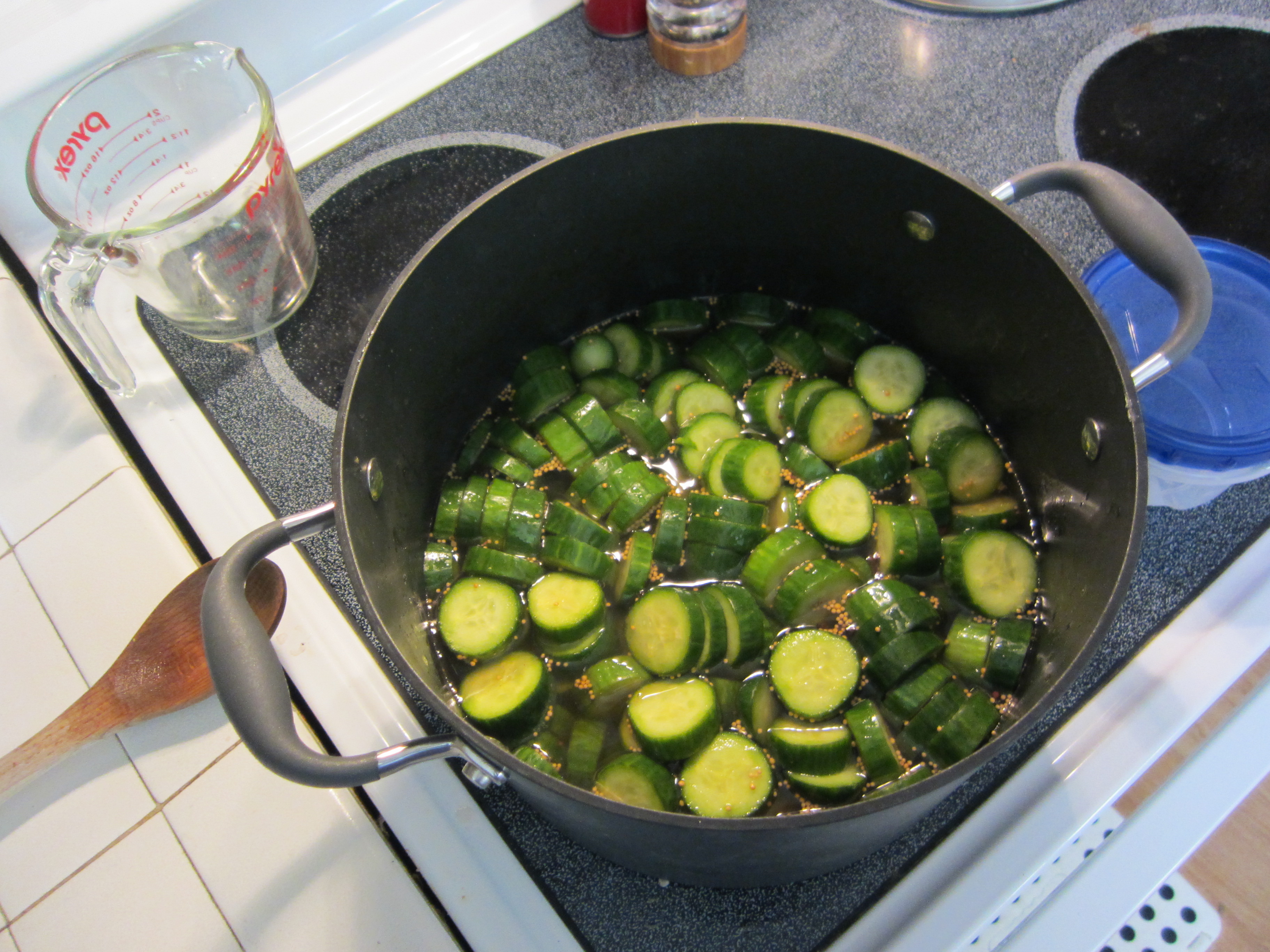
You can see here that the amount of vinegar called for in the recipe did not cover the slices, so I added about another cup of vinegar, another cup of sugar, and adjusted the spices a tiny bit. That is because I used 15 cucumbers instead of 12. We carefully brought them to a boil, stirring occasionally to make sure all the slices were submerged in the juice. In the meantime, I washed the jars in hot HOT water and set them aside still warm. We boiled the slices until they lost their bright green color and began to look like pickles. Wow, so simple!
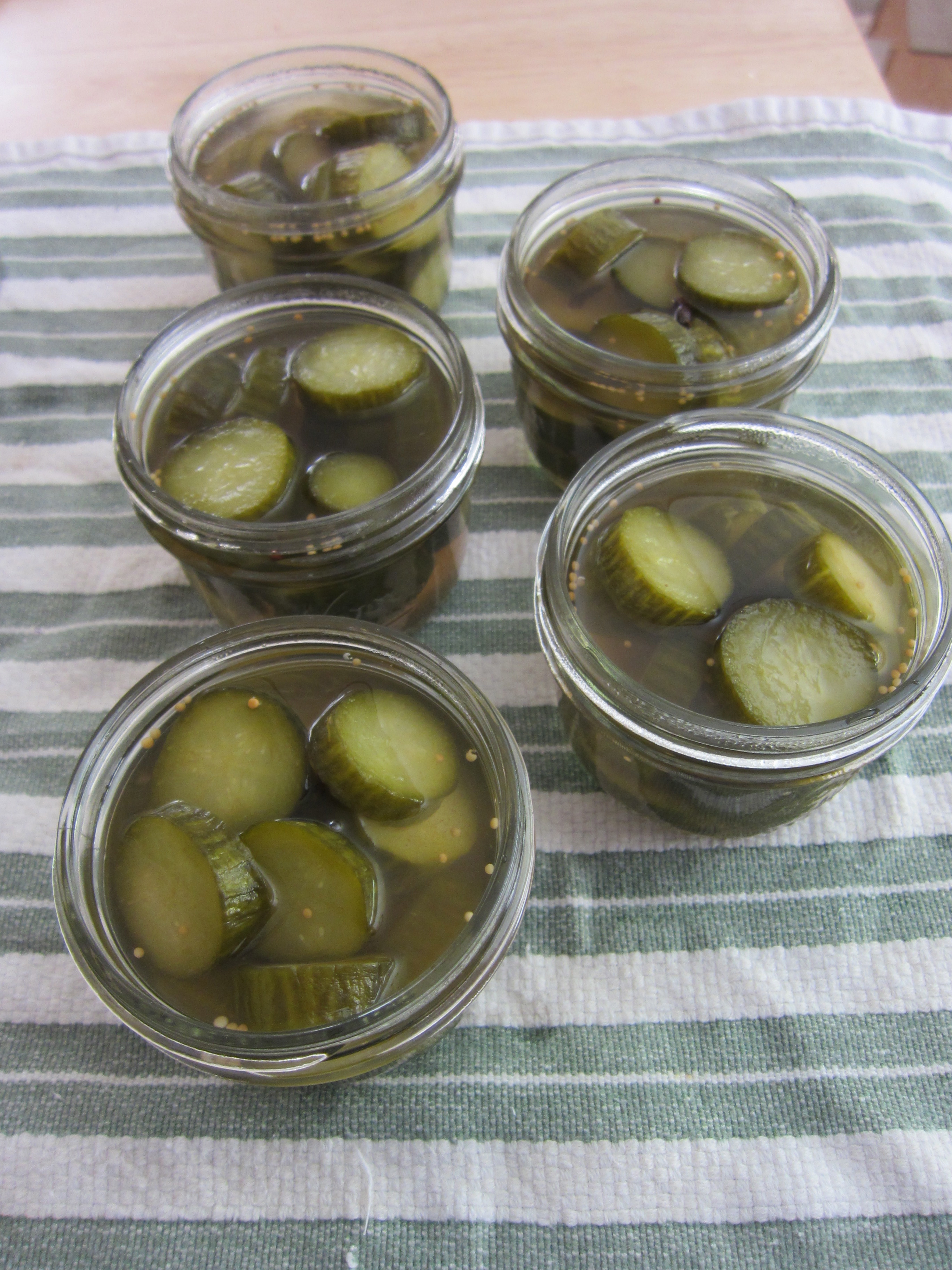
I used a slotted spoon to fill the jars with pickles then a ladle to fill in with juice. I had about 1 1/2 cups of juice left over. This picture shows five 1/2 pint jars, but I also had 1 1/5 quarts in another container that wasn’t as pretty. I call it artistic license. The best part? The pickles were AWESOME! I gave the jars to my friends at work and all of them loved the pickles – my one friend had to fight her daughter for the last slice. That makes my day! The whole process took between 45 minutes to 1 hour and that includes slicing all the cukes.

These are refrigerator pickles, meaning they must be stored in the fridge or they will spoil. If you want to can them properly to store in the pantry, you will need to boil the jars in hot water for up to 20 minutes depending on altitude. This will fully seal and sterilize the jars to prevent bacteria from entering and spoiling the food – and you.

Get creative if you try these! I have seen sweet pickles with onion slices and garlic, you could pickle carrots, green beans, baby zucchini, pretty much anything.

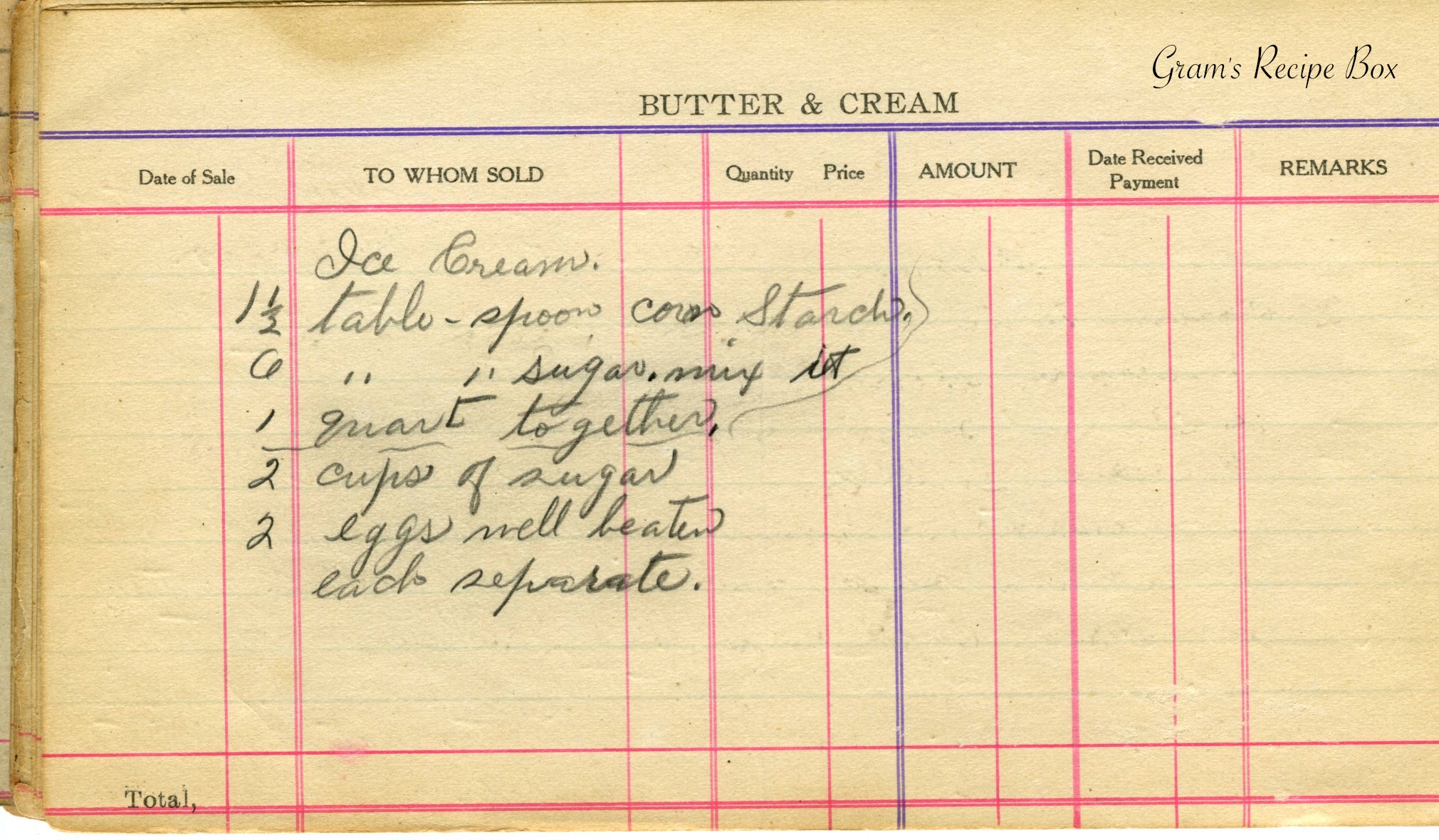
Ice Cream

This recipe for ice cream made with corn starch is missing quite a lot, namely cream and instructions. Making ice cream with corn starch is not new, clearly, but it has enjoyed a recent reappearance in gourmet kitchens because corn starch is used in the gelattos and cream desserts of other countries, such as India and Vietnam. It helps thicken and makes the cream very smooth once beaten and chilled/frozen, allegedly  like a frozen pudding dessert. Because the recipe from our little Farmer’s book is completely incomplete, I have reprinted the New York Times recipe from 2007 below. Click through to the recipe for flavor variations.

I think this summer I might just get an ice cream maker…

Ice Cream

2 1/2 cups light cream, half-and-half or milk (whole or skim), or a combination

1/2 cup sugar

Pinch of salt

1 vanilla bean or 1 teaspoon vanilla extract

3 tablespoons cornstarch.

1. Put 2 cups cream, half-and-half or milk, the sugar and salt in a saucepan over medium-low heat. If using a vanilla bean, split in half lengthwise and scrape seeds into liquid, then add pod. Cook until mixture begins to steam.

2. In a bowl, blend cornstarch and remaining cream, half-and-half or milk; there should be no lumps. Remove bean pod from pot and discard. Add cornstarch mixture to pot. Cook, stirring, until it starts to thicken and barely reaches a boil, about 5 minutes. Immediately reduce heat to very low and stir for 5 minutes or so until thick. Stir in vanilla extract, if using.

3. If mixture has lumps, strain it into a bowl. Chill until cool, a couple of hours (you can skip this step if you have a machine with a built-in freezer). When cool or if there are no lumps, pour into an ice cream machine and freeze according to the manufacturer’s instructions.

Chocolate Cake and Creamy Chocolate Frosting

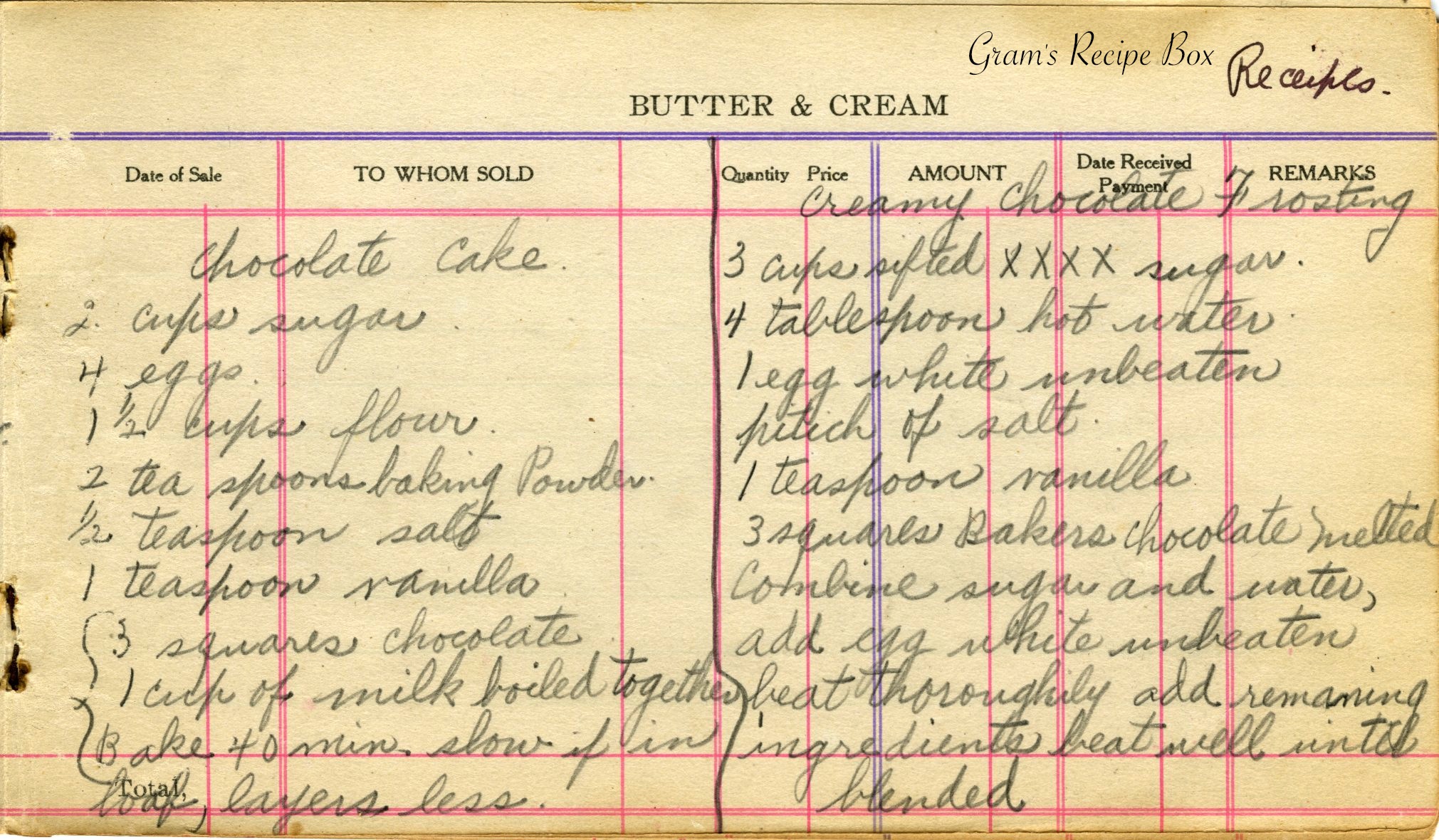
This will make you a chocolate-y cake with some creamy and smooth icing. A note on the icing. XXXX sugar is now known as confectioners sugar or icing sugar. It is sugar crushed superfine with about 3% cornstarch to prevent clumping. Secondly, this icing isn’t cooked, so beware of the fact that you are using raw egg in it. If I were to make this icing I’d probably leave out the egg altogether.

Chocolate Cake

2 cups sugar

4 eggs

1 1/2 cups flour

2 teaspoons baking powder

1/2 teaspoon salt

1 teaspoon vanilla

3 squares chocolate

1 cup of milk boiled together

Bake 40 min slow if in loaf layers less

Creamy Chocolate Frosting

3 cups sifted xxxx sugar

4 tablespoons hot water

1 egg white unbeaten

pinch of salt

1 teaspoon vanilla

3 squares Bakers chocolate melted

Combine sugar and water, add egg white unbeaten, beat thoroughly. Add remaining ingredients, beat well until blended

Cream Pie

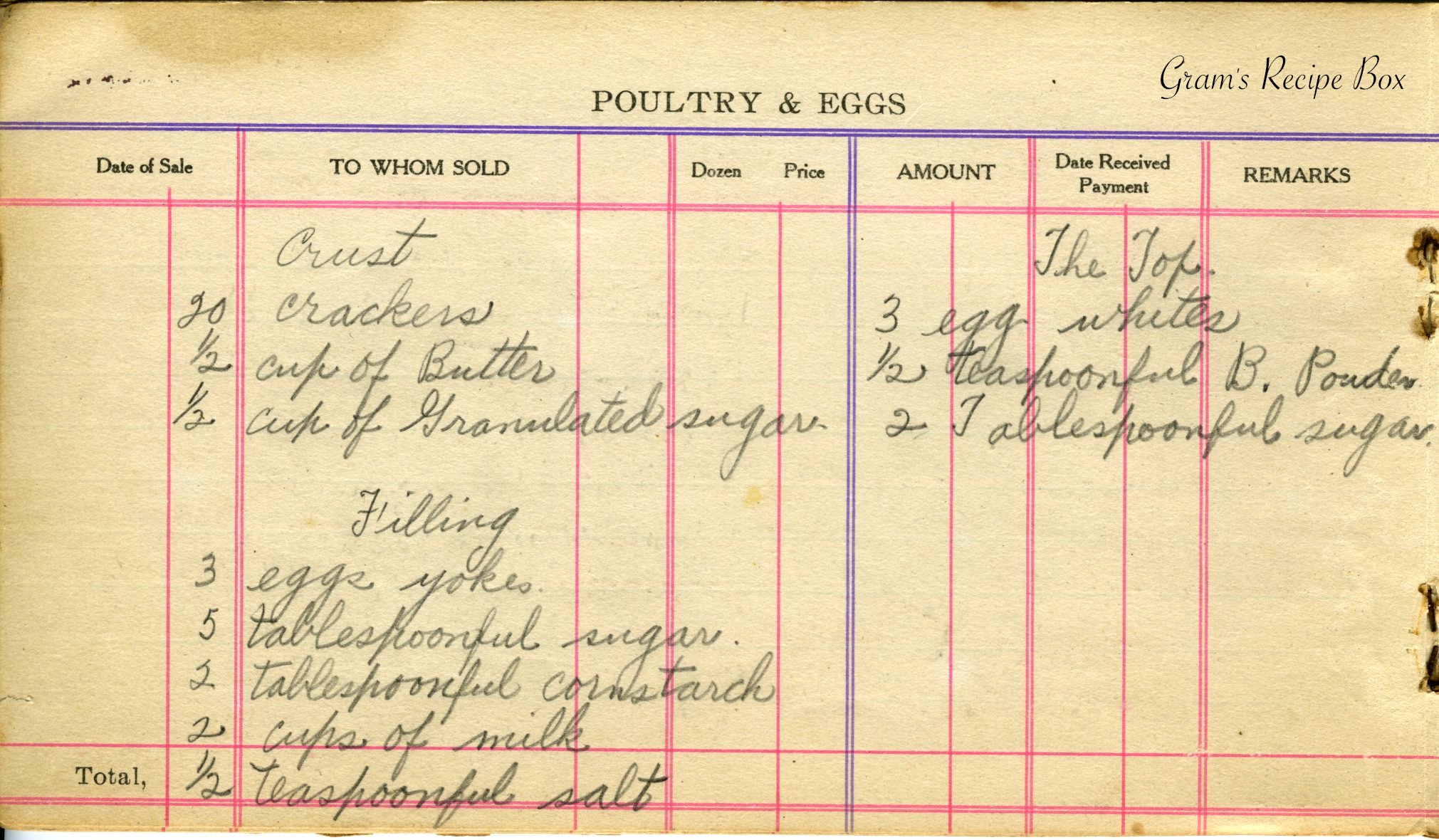
Unfortunately this recipe doesn’t have a name to identify what kind of pie this is, but the pudding filling makes it a cream pie of some kind with a meringue topping.  My best guess on the crust is that it calls for graham crackers. I will put some common sense directions in italics.

Cream Pie

Crust

20 crackers

1/2 cup of butter

1/2 cup of granulated sugar

Crush crackers into crumbs and combine with butter & sugar, press into pie pan

Filling

3 egg yokes

5 tablespoonsful sugar

2 tablespoonsful cornstarch

2 cups of milk

1/2 teaspoonful salt

Combine and cook over medium heat until thickened, pour into crust

The Top

3 egg whites

1/2 teaspoonful B. Powder

2 tablespoonsful sugar

Beat together to make a meringue, pour over filling, bake at low temperature


Raised Doughnuts

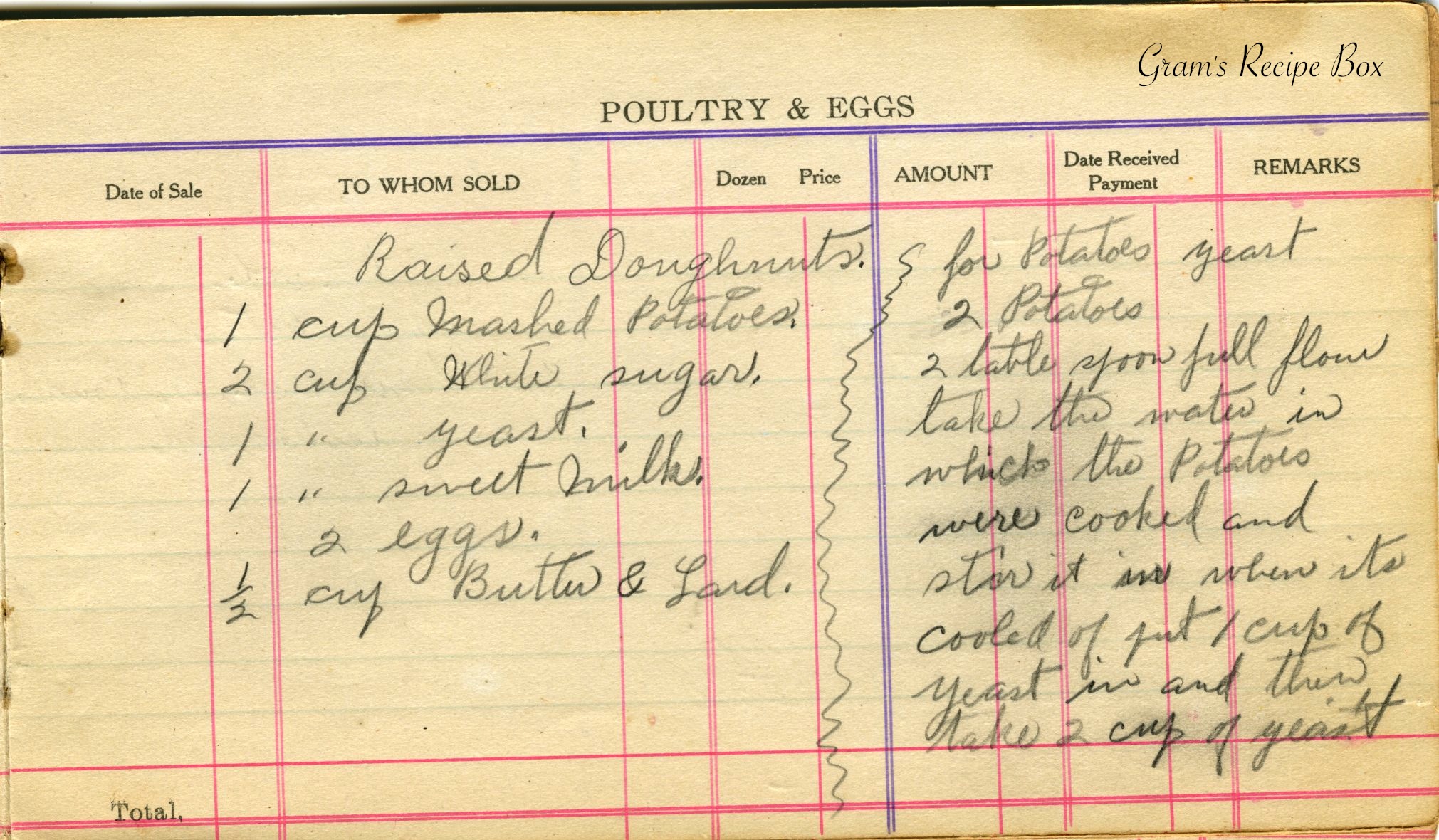
Dough nuts don’t seem like they would be especially difficult to make at home, just make up the dough and fry them in hot grease. Like making french fries. Oh, my mother used to make us french fries cooked in hot bacon grease, to die for!! Anyway, raised doughnuts (dough nuts, donuts) call for yeast in the dough and need to rise for about an hour, then rise again after they have been cut into dough nut shapes.

If the reference to “potato yeast” confuses you, don’t worry you are not alone. In my research I learned that while potato dough nuts have been around for years, in the 30s or 40s, a pair of enterprising brothers in Utah coined the word “spudnut” to reference potato flour. The potato flour would have been used the same as mashed potatoes in this recipe. Apparently there was a spudnut craze for quite a while, and there remain Spudnut Shops nationwide. As to the directions up there, I think it creates a type of starter, like for sourdough. Anyone have input here?

Raised Doughnuts

1 cup mashed potatoes

2 cups white sugar

1 cup yeast

1 cup sweet milk

2 eggs

1/2 cup butter & lard

For potato yeast

2 potatoes

2 tablespoons full flour

Take the water in which the potatoes were cooked and stir it in when its cooled of put 1 cup of yeast in and then take 2 cup of yeast